研究目的
To compare the emission properties of a graded-index thermoplastic polymer optical fiber and a step-index thermosetting polymer optical fiber, both doped with rhodamine 6G, including analysis of amplified spontaneous emission, optical gains, losses, and photostability.
研究成果
The thermoplastic POF exhibited better ASE characteristics, lower attenuation, and higher photostability compared to the thermosetting POF. Key factors influencing emission properties were dye concentration and distribution, with higher concentrations leading to negative effects like aggregation. Spectral shifts with propagation distance were observed, suggesting potential for tunable light sources. The study highlights the importance of optimizing dye parameters for applications in amplifiers and sensors.
研究不足
The study used short fiber lengths (about 1 cm), which may not represent equilibrium conditions for attenuation coefficients compared to standard methods using longer fibers. The influence of dye aggregates in high-concentration fibers (e.g., thermosetting POF) could affect results, and the specific host matrix effects were not isolated due to differences in dye distribution and concentration. Potential saturation effects at high pump energies and the use of non-commercial fibers limit generalizability.
1:Experimental Design and Method Selection:
The study employed transverse excitation of the fibers using optical pumping. Key methods included the variable-stripe-length (VSL) method for measuring optical gains, side-illumination technique for attenuation measurements, and spectral analysis for fluorescence and amplified spontaneous emission (ASE). Theoretical models for gain and attenuation were applied using specific equations.
2:Sample Selection and Data Sources:
Two types of polymer optical fibers (POFs) were analyzed: a graded-index thermoplastic POF and a step-index thermosetting POF, both doped with rhodamine 6G. The thermoplastic POF had a non-uniform dopant distribution with an average concentration of 16 ppm, while the thermosetting POF had a uniform distribution with 300 ppm concentration. Fibers were produced by Keio Photonics Research Institute and Intellisiv Ltd., respectively.
3:6G. The thermoplastic POF had a non-uniform dopant distribution with an average concentration of 16 ppm, while the thermosetting POF had a uniform distribution with 300 ppm concentration. Fibers were produced by Keio Photonics Research Institute and Intellisiv Ltd., respectively.
List of Experimental Equipment and Materials:
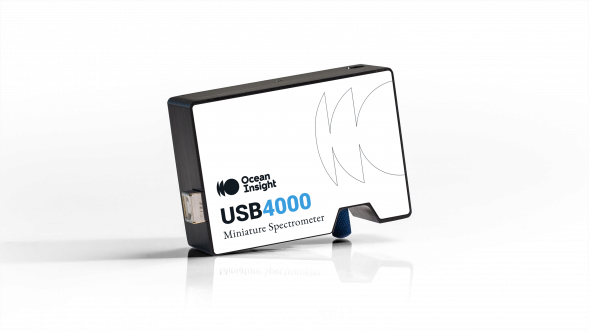
3. List of Experimental Equipment and Materials: Equipment included a frequency doubler coupled to a Nd:YAG nanosecond laser (EKSPLA NL301HT) for ASE studies, a tunable visible femtosecond laser (Spectra-Physics Mai Tai HP) with a frequency doubler (Inspire Blue) for attenuation and photostability measurements, cylindrical lenses, a fiber-optic spectrometer (Ocean Optics USB4000), and a spectrophotometer (Cary 50UV–VIS). Materials included the doped POFs and optical components like lenses and filters.
4:Experimental Procedures and Operational Workflow:
Fibers were transversely pumped with laser light focused into a narrow stripe using a cylindrical lens. For gain measurements, the VSL method varied the excitation length (ze) while keeping the non-excited length (zne) constant. Attenuation was measured by increasing zne with constant ze. Photostability was assessed by exposing fibers to laser light for prolonged periods and measuring changes in fluorescence properties over time.
5:Data Analysis Methods:
Spectral data were collected using the fiber-optic spectrometer. Gain coefficients were calculated by fitting output irradiance to an exponential equation. Attenuation coefficients were derived from exponential decay fits of irradiance with propagation distance. Photostability data were fitted to double-exponential models to analyze degradation rates.
独家科研数据包�,助您复现前沿成果,加速创新突破
获取完整内容