研究目的
Measuring the e?ective electro-optic coe?cient at 1040 nm by spectral intensity modulation with THz time-domain spectroscopy.
研究成果
The method for measuring e?ective EO coe?cients by spectral intensity modulation with a THz-TDS device is simple, rapid, and highly sensitive, showing good agreement with conventional methods.
研究不足
The method requires the determination of the electric ?eld intensity of the incident THz wave and may be limited by the accuracy of this measurement.
1:Experimental Design and Method Selection
A THz-TDS system uses a femtosecond Yb-doped photonic crystal ?ber ampli?er as the pump source. The THz wave emitter is a 3 mm ?1 1 0?-cut GaP crystal. The output power and the waveform of the emitted THz wave are characterized by a Golay cell and the standard THz-TDS, respectively.
2:Sample Selection and Data Sources
Four kinds of EO materials were prepared, including ZnTe and GaP crystals, DAST wafer and GaSe ?lm.
3:List of Experimental Equipment and Materials
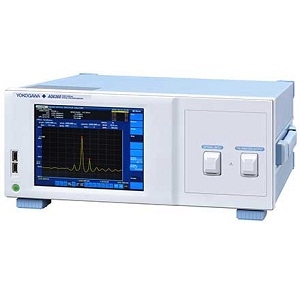
Golay cell (GC-1P, TYDEX), spectrometer (YOKOGAWA AQ6370B), femtosecond Yb-doped photonic crystal ?ber ampli?er.
4:Experimental Procedures and Operational Workflow
The generated THz radiation is collected and focused onto the samples with four 90° o?-axis parabolic mirrors for EOS to characterize the modulated amplitude and phase of the THz wave. Part of the probe beam is imported into a spectrometer to measure the spectral intensity change caused by THz wave.
5:Data Analysis Methods
The EO coe?cients are calculated based on the spectral intensity modulation and compared with literature data.
独家科研数据包�����,助您复现前沿成果�,加速创新突破
获取完整内容