研究目的
Investigating the effects of beam diameter and hatch spacing between the scanning paths on the bendability and microstructural behavior of an AISI 316 stainless-steel sheet in three-dimensional laser forming.
研究成果
The study concluded that beam diameter and hatch spacing significantly affect the bendability and microstructure of AISI 316 stainless-steel sheets in three-dimensional laser forming. Smaller hatch spacings and larger beam diameters led to increased bendability due to reduced anisotropy and grain boundary strengthening. The findings provide insights into optimizing laser forming processes for enhanced material properties.
研究不足
The study is limited to AISI 316 stainless-steel sheets and specific laser parameters. The findings may not be directly applicable to other materials or laser settings without further research.
1:Experimental Design and Method Selection:
The study involved laser forming experiments on AISI 316 stainless-steel sheets using an ytterbium fiber laser with a raster scanning pattern. The effects of beam diameter and hatch spacing on bendability and microstructure were analyzed.
2:Sample Selection and Data Sources:
AISI 316 stainless-steel sheets with dimensions of 18 × 22 ×
3:5 mm were used. The laser power and scanning velocity were set at 150 W and 82 mm/s, respectively. List of Experimental Equipment and Materials:
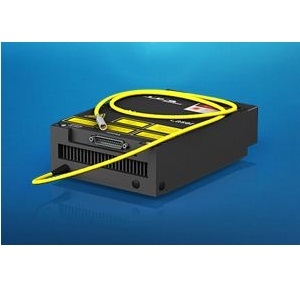
Equipment included an IPG YLR-200 ytterbium fiber laser, Mitutoyo micrometer for measurements, and SEM (ZEISS GEMINI SUPRATM; 40 VP) for observations.
4:Experimental Procedures and Operational Workflow:
The laser forming process was conducted with varying beam diameters and hatch spacings. Post-processing included microstructural analysis and microhardness testing.
5:Data Analysis Methods:
Finite-element simulations using ABAQUS? were performed to analyze strains and temperatures. Microstructural changes were examined through optical microscopy and SEM.
独家科研数据包��,助您复现前沿成果�����,加速创新突破
获取完整内容