研究目的
Understanding the Defects Properties of Quasi-2D Halide Perovskites for Photovoltaic Applications
研究成果
The study reveals that quasi-2D perovskite films exhibit severe defects compared to 3D counterparts, with higher trap energy levels and densities, leading to dominant monomolecular recombination in devices. These findings highlight the importance of reducing trap density and activation energy for improving the efficiency of 2D perovskite solar cells.
研究不足
The study focuses on the defects properties and carrier recombination dynamics in quasi-2D halide perovskites, with comparisons to 3D counterparts. Limitations include the specific materials and devices studied, which may not encompass all variations of perovskite solar cells. The experimental conditions and characterization techniques may also limit the generalizability of the findings.
1:Experimental Design and Method Selection:
The study employs temperature-dependent admittance spectroscopy (AS), light-intensity-dependent VOC, space-charge-limited-circuit (SCLC), and photoluminescence measurements to profile defects states in 2D perovskite films.
2:Sample Selection and Data Sources:
2D BA2MA3Pb4I13 and 3D MAPbI3 perovskite films and devices are prepared and compared.
3:List of Experimental Equipment and Materials:
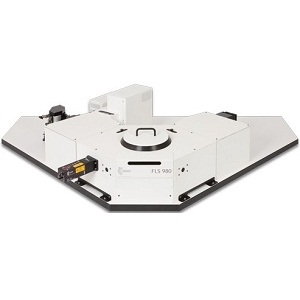
Includes UV-visible spectrophotometer, FLS980 for TRPL, electrochemical workstation for EIS, and Keithley 2400 for J-V characteristics.
4:Experimental Procedures and Operational Workflow:
Fabrication of perovskite solar cells, characterization of their performance, and defect analysis through various spectroscopic techniques.
5:Data Analysis Methods:
Analysis of trap density, carrier mobility, recombination resistance, and defect activation energy using SCLC, AS, and EIS measurements.
独家科研数据包�,助您复现前沿成果,加速创新突破
获取完整内容