研究目的
To investigate the photoelectrochemical hydrogen evolution reaction (HER) from water using Rhodium-doped strontium titanate, surface-modified by the addition of minute amounts of platinum nanoparticles, and to analyze the dynamics of the HER in pH-neutral aqueous solutions.
研究成果
The study concluded that Rh:SrTiO3-Pt photoelectrodes exhibit a strong non-ideal behavior at the semiconductor/electrolyte interface, attributed to the presence of a high density of surface states. The charge transfer and recombination rate constants were found to vary exponentially with the applied potential, with a Butler-Volmer transfer coefficient of 0.21 and a non-ideality factor of 0.04. The space charge capacitance under inversion conditions was also measured and analyzed, providing insights into the mechanism of visible-light driven HER and guidelines for the future development of surface co-catalysts.
研究不足
The study acknowledges the complexity of the equations and the large number of parameters employed in the analysis of PEIS data, which may limit the adoption of the method by the community of electrochemists. Additionally, the possible roughness of different photoelectrode surfaces is not specifically taken into account in the kinetic model, which may affect the accuracy of the results.
1:Experimental Design and Method Selection:
The study employed Photoelectrochemical Impedance Spectroscopy (PEIS) to analyze the HER kinetics on Rh:SrTiO3 and Rh:SrTiO3-Pt in aqueous media. A kinetic model derived from heterogeneous kinetic considerations was used to analyze experimental data.
2:Sample Selection and Data Sources:
Rhodium-doped strontium titanate (Rh:SrTiO3) was selected as the semiconducting material for the photoelectrode. Surface modification was achieved by adding minute amounts of platinum nanoparticles.
3:List of Experimental Equipment and Materials:
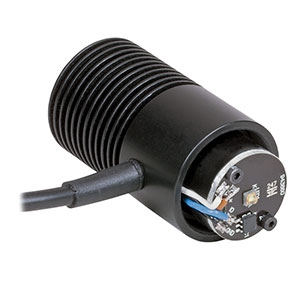
The study used a model 2100A Modulab Solartron Analytical potentiostat for electrochemical measurements, a LED from Thorlabs as a light source, and a quartz photoelectrochemical cell for PEIS measurements.
4:Experimental Procedures and Operational Workflow:
Photoelectrodes were prepared by drop-casting a suspension of Rh:SrTiO3 e Pt on top of an ITO film on a glass substrate. PEIS spectra were recorded under potentiostatic conditions, using a 10 mV amplitude sinusoidal potential perturbation.
5:Data Analysis Methods:
Experimental PEIS spectra were fitted using a lab-made Matlab R2014b code based on a model equation that takes into account the charge transfer and recombination kinetics.
独家科研数据包���,助您复现前沿成果��,加速创新突破
获取完整内容