研究目的
Designing a novel far-red FRET fluorescent probe for ratiometric detection of L-cysteine based on carbon dots and N-acetyl-L-cysteine-capped gold nanoparticles.
研究成果
The developed far-red FRET fluorescent probe enables sensitive and selective ratiometric detection of L-Cys with a linear range of 1.0-110 μM and a detection limit of 0.16 μM. It exhibits excellent selectivity and has been successfully applied to human serum samples with good recoveries, demonstrating high potential for diagnosing cysteine-related diseases. Future work could focus on enhancing the probe's performance in complex matrices and exploring in vivo applications.
研究不足
The probe may have interference from high concentrations of other thiol compounds like glutathione and homocysteine, though selectivity is high for L-Cys. The method requires optimization of pH and incubation time, and the synthesis of nanomaterials might be complex for some applications. Further studies could improve stability and applicability in more diverse biological samples.
1:Experimental Design and Method Selection:
The study employs a FRET-based ratiometric fluorescence sensing approach using CDs as energy donors and NAC-AuNPs as energy acceptors, assembled via electrostatic interaction. The method is chosen for its ability to reduce background effects and provide built-in correction using two emission wavelengths.
2:Sample Selection and Data Sources:
L-Cys solutions of various concentrations (1.0-110 μM) are used as samples. Human blood serum samples are collected from a clinical laboratory and diluted for real-sample application.
3:0-110 μM) are used as samples. Human blood serum samples are collected from a clinical laboratory and diluted for real-sample application.
List of Experimental Equipment and Materials:
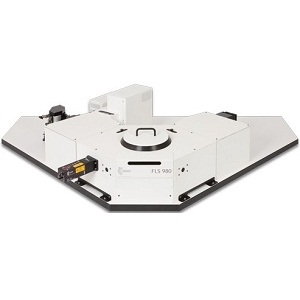
3. List of Experimental Equipment and Materials: Key materials include CDs synthesized from 4-aminobenzoic acid and m-phenylenediamine, NAC-AuNPs synthesized from HAuCl4·3H2O and NAC, and L-Cys. Equipment includes a JEOL JEM-2100 TEM, TU-1901 UV-vis spectrophotometer, FP-8300 fluorescence spectrometer, and FLS 920 fluorescence lifetime spectrometer.
4:Experimental Procedures and Operational Workflow:
CDs and NAC-AuNPs are synthesized via hydrothermal and reduction methods, respectively. For L-Cys detection, CDs, NAC-AuNPs, and L-Cys are mixed in phosphate buffer (pH 7.0), incubated for 3 min, and fluorescence spectra are recorded at 414 nm excitation. Parameters like incubation time and pH are optimized.
5:0), incubated for 3 min, and fluorescence spectra are recorded at 414 nm excitation. Parameters like incubation time and pH are optimized.
Data Analysis Methods:
5. Data Analysis Methods: Fluorescence intensities at 539 nm and 630 nm are measured, and the ratio I539/I630 is plotted against L-Cys concentration for linear regression analysis. Detection limit is calculated as 3δ/k. Selectivity is tested against other amino acids and ions.
独家科研数据包��,助您复现前沿成果�,加速创新突破
获取完整内容