研究目的
To improve water stability and tune oxygen sensitivity in fluorescent porous coordination frameworks by introducing hydrophobic alkyl side groups into the dicarboxylate ligand.
研究成果
The research successfully demonstrated that lengthening hydrophobic alkyl side groups in PCPs increases moisture stability but decreases oxygen sensitivity. By mixing short and long alkyl chains in solid-solution frameworks, high moisture stability and high oxygen sensitivity were achieved simultaneously. Additionally, the Stern-Volmer plot of luminescence data proved more sensitive for detecting impurities and stability issues than conventional methods like PXRD, offering insights for future design and characterization of luminescent PCPs.
研究不足
The study is limited to specific alkyl groups (ethyl, butyl, hexyl) and their mixtures in isostructural frameworks; other functional groups or non-isostructural frameworks were not explored. The moisture stability tests were conducted under controlled humidity conditions (e.g., 50% RH, 100% RH), but long-term stability in varying environmental conditions was not fully assessed. The sensitivity of luminescence methods, while high, may be affected by sample handling and activation processes, potentially introducing impurities.
1:Experimental Design and Method Selection:
The study involved synthesizing isostructural porous coordination frameworks (PCPs) with varying alkyl side groups (ethyl, butyl, hexyl) and their solid-solutions to investigate the trade-off between luminescence oxygen sensitivity and moisture stability. Theoretical models included molecular mechanics calculations for structure simulation and the Stern-Volmer equation for analyzing oxygen quenching data.
2:Sample Selection and Data Sources:
Samples were synthesized using solvothermal reactions with Zn(NO3)2?6H2O, 4,4′-bipyridine, and alkyl-functionalized 9H-fluorene-2,7-dicarboxylic acid ligands. Phase purity and stability were checked using powder X-ray diffraction (PXRD) and thermogravimetry.
3:List of Experimental Equipment and Materials:
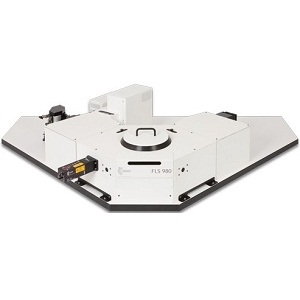
Equipment included a Bruker D8 ADVANCE X-ray powder diffractometer for PXRD, a NETZSCH TG 209 F3 Tarsus instrument for thermogravimetry, a Bruker AVANCE III 400 MHz NMR spectrometer for 1H NMR, and an Edinburgh FLS980 spectrometer for photoluminescence measurements. Materials involved chemicals like Zn(NO3)2?6H2O, ligands (H2efda, H2bfda, H2hfda), and solvents (DMA, DMF).
4:Experimental Procedures and Operational Workflow:
Synthesis was performed via solvothermal reactions at 90°C for 72 hours, followed by cooling, filtration, washing, and activation under vacuum. Photoluminescence measurements were conducted in a sealed chamber with controlled O2 pressures, using fixed excitation at 330 nm.
5:Data Analysis Methods:
Data were analyzed using the Stern-Volmer equation to determine quenching constants and linearity, with fitting for nonlinear curves. PXRD patterns and NMR were used to confirm structures and compositions.
独家科研数据包,助您复现前沿成果���,加速创新突破
获取完整内容