研究目的
Investigating the isotopic shifts and hyperfine structures of uranium transitions using tunable laser spectroscopy of laser ablation plumes.
研究成果
The study demonstrated that isotopic shifts between 238U and 235U are entangled with hyperfine structures of 235U. High absorbance at the 238U peak affects LIF measurements, while LAS provides a more accurate measurement of isotope ratios. The hyperfine constants for uranium can be empirically estimated through model regressions applied to spectra generated in laser-produced plasma systems.
研究不足
The high absorbance of 238U affects the accuracy of LIF measurements. The nonlinearity of LIF signal with atomic number density under high absorbance conditions presents challenges for quantitative measurements.
1:Experimental Design and Method Selection
The study employed tunable laser spectroscopy, including laser-induced fluorescence (LIF) and laser absorption spectroscopy (LAS), to analyze isotopic shifts and hyperfine structures in uranium transitions. The plasmas were generated by ns laser ablation on a natural uranium metal target.
2:Sample Selection and Data Sources
The target was natural uranium, containing ~0.73% 235U and ~99.27% 238U, positioned in a chamber with a 10 Torr nitrogen ambient gas.
3:List of Experimental Equipment and Materials
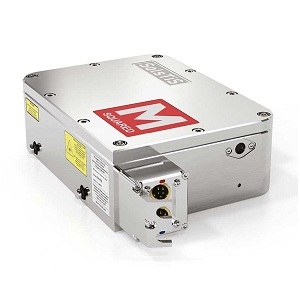
Nd:YAG laser (Continuum, Surelite), Titanium-Sapphire laser (M-squared laser, SolsTiS), wavemeter, photodiode, data acquisition board, spectrograph with ICCD.
4:Experimental Procedures and Operational Workflow
The plasma plumes were generated by focusing 1064 nm, 6 ns pulses from an Nd:YAG laser. A cw tunable Titanium-Sapphire laser was used for LIF/LAS excitation. The LIF emission was collected using a fiber and analyzed with a spectrograph-ICCD combination.
5:Data Analysis Methods
The time-resolved transmission profile was recorded for each laser shot, and the probe transmission was converted to absorbance. Spectral modeling was used to estimate hyperfine constants.
独家科研数据包���,助您复现前沿成果���,加速创新突破
获取完整内容