研究目的
Investigating the energy transfer behaviors and tunable luminescence in Tb3+/Eu3+ codoped oxyfluoride glass ceramics containing cubic/hexagonal NaYF4 nanocrystals, with a focus on the relationship between glass crystallization and energy transfer efficiency.
研究成果
The research demonstrates that energy transfer from Tb3+ to Eu3+ is more efficient in cubic NaYF4 nanocrystals than in hexagonal ones, contrary to expectations based on crystal order, due to preferential partitioning of dopants into the cubic phase during glass crystallization. This highlights the critical role of glass crystallization in determining optical properties and provides guidance for designing high-performance glass ceramics with tunable luminescence for applications in lighting and displays.
研究不足
The study is limited to specific compositions of oxyfluoride glass ceramics and may not generalize to other systems. The experimental conditions, such as heat-treatment temperatures and times, could be optimized further. Potential areas for optimization include improving the homogeneity of dopant distribution and exploring other crystal phases or dopants.
1:Experimental Design and Method Selection:
The study employed conventional melt-quenching technique followed by heat-treatment to prepare glass ceramics containing phase-transformed NaYF4 nanocrystals. The compositions were designed based on SiO2-Al2O3-Na2CO3-NaF-YF3-TbF3-EuF3 to control phase transformation (cubic or hexagonal).
2:Sample Selection and Data Sources:
Samples were prepared with varying concentrations of Tb3+ and Eu3+ as specified in Table 1, using raw materials mixed and melted at 1450-1550°C, then heat-treated at 650°C for 2 hours.
3:List of Experimental Equipment and Materials:
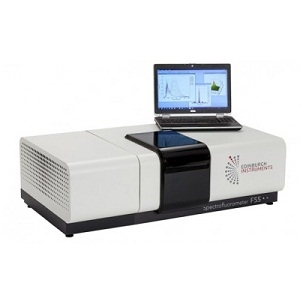
Equipment included X-ray diffractometer (Rigaku MiniFlex600), transmission electron microscopy (TEM, JEM-2010), spectrofluorometer (Edinburgh Instruments FS5), xenon lamp (150 W for excitation, pulsed for lifetime), monochromater with ICCD (Andor iStar 340T 18U73), and Opolette 355 LD laser. Materials were high-purity chemicals for glass synthesis.
4:Experimental Procedures and Operational Workflow:
Precursor glasses were melted, quenched, annealed at 400°C for 10 hours, and heat-treated. Structural characterization was done via XRD and TEM, while luminescence properties were measured using excitation/emission spectra, time-resolved spectra, and decay curves with specific excitation wavelengths and monitoring conditions.
5:Data Analysis Methods:
Data were analyzed using fitting of decay curves with mono-exponential functions to calculate lifetimes and energy transfer efficiency, and comparison of spectral features to confirm energy transfer behaviors.
独家科研数据包�,助您复现前沿成果,加速创新突破
获取完整内容