研究目的
Investigating the polarization-insensitive fiber-to-fiber gain of a semiconductor optical amplifier using closely stacked InAs/GaAs quantum dots.
研究成果
The study concludes that closely stacked InAs/GaAs quantum dots are suitable for realizing polarization-insensitive semiconductor optical amplifiers with broad operation bandwidths of more than 100 nm. The small polarization-dependent gain difference (less than 1 dB) over a wide wavelength range (1060 to 1170 nm) demonstrates the potential of these devices for advanced optical communication applications.
研究不足
The study acknowledges the high total loss in the fiber-to-fiber system, particularly the coupling loss between the SOA device and the optical fibers, which affects the fiber-to-fiber gain. Further improvements in coupling efficiency are needed to enhance the device's performance.
1:Experimental Design and Method Selection:
The study employed a fiber-to-fiber measurement system to analyze the gain characteristics of a semiconductor optical amplifier (SOA) containing forty layers of closely stacked InAs/GaAs quantum dots (QDs). The methodology included measuring the gain for transverse-electric (TE)- and transverse-magnetic (TM)-polarized optical input signals.
2:Sample Selection and Data Sources:
The SOA device structure was fabricated on a Si-doped n+-GaAs(001) substrate using solid-source molecular beam epitaxy. The device included a 400-nm-thick single-mode active layer comprising a GaAs/stacked QD layers/GaAs structure.
3:List of Experimental Equipment and Materials:
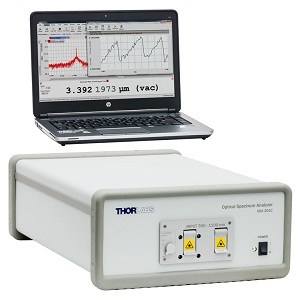
The experimental setup included an optical spectrum analyzer with a high wavelength resolution of 40 pm (Thorlabs, OSA202), a supercontinuum white laser light source, a polarization controller, and a Peltier device for temperature stabilization.
4:Experimental Procedures and Operational Workflow:
The linearly polarized ASE spectra and output power spectra with a polarized input signal were measured. The fiber-to-fiber gain was defined and calculated based on the power of the input signal and the detected output power.
5:Data Analysis Methods:
The polarization-dependent gain (PDG) was analyzed as the difference between the fiber-to-fiber gain values obtained for TE- and TM-polarized input signals. The data were analyzed to understand the polarization anisotropy and the operational bandwidth of the SOA device.
独家科研数据包�����,助您复现前沿成果���,加速创新突破
获取完整内容